Where Cherry Blossoms Whisper Tales of Time on Kyoto’s Ancient Path
A Journey Through Seasons of Reflection and Serenity Along the Canal of Contemplation, Unfolding Memories in Every Step
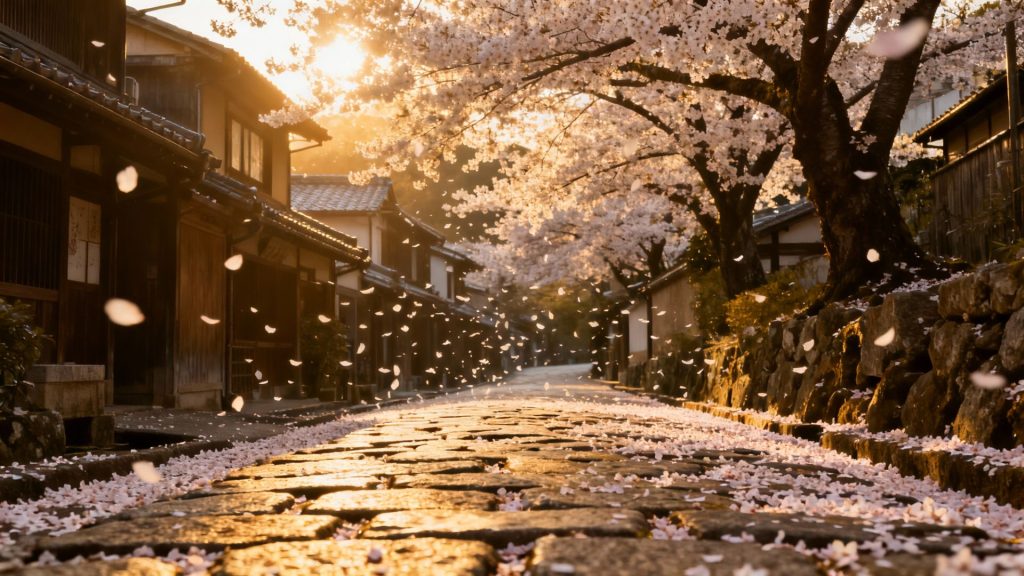
Dawn breaks softly over the Philosopher’s Path, a ribbon of tranquility winding beside a centuries-old canal, where cherry blossoms unfurl like delicate pink clouds against the awakening sky. The air hums with the scent of dew-kissed petals, mingling with the gentle rustle of leaves, transporting you to a realm where time slows to a whisper. Here, the first light catches the curve of stone bridges, their moss-covered surfaces bearing silent witness to seasons past, inviting you to pause and breathe in the stillness. This is not merely a walk but a sensory immersion, where the crunch of gravel underfoot and the distant chime of temple bells weave a tapestry of calm, awakening dormant recollections of journeys long forgotten.
The heart of this path lies in its embrace of nature’s artistry—a narrow canal flanked by rows of sakura trees, their branches arching overhead to form a living cathedral. Sunlight filters through the blossoms, casting dappled shadows on the water’s surface, where koi glide like liquid jewels. Stone lanterns, weathered by rain and wind, stand sentinel along the banks, their intricate carvings telling tales of Zen philosophy that once inspired monks to meditate here. Every step reveals new textures: the cool smoothness of ancient stepping stones, the rough bark of cherry trees, and the soft murmur of flowing water that echoes the rhythm of contemplation. This landscape, sculpted by human hands yet ruled by nature’s hand, becomes a mirror for the soul, reflecting not just beauty but the quiet resilience of life.
Embedded in this scenery is the spirit of Kyoto’s cultural heritage, where the path itself is a testament to harmony between humanity and the elements. Inspired by the teachings of Nishida Kitaro, who walked here in deep thought, the design follows the canal’s natural flow, avoiding rigid lines in favor of organic curves that mimic the surrounding hills. Local traditions infuse every detail, from the placement of shrines that honor seasonal changes to the way cherry blossoms symbolize impermanence in Japanese aesthetics. This is a place where history breathes through the stones, not as a relic but as a living dialogue—a reminder that true wisdom lies in observing how nature adapts and endures, fostering a sense of continuity that resonates with the wanderer’s own narrative.
As the seasons turn, the path transforms into a kaleidoscope of emotions, each shift painting a new layer of nostalgia. Spring’s blush of cherry blossoms gives way to summer’s lush green canopy, where dragonflies dart and cicadas sing, evoking childhood memories of endless afternoons. Autumn arrives in a blaze of crimson and gold, leaves drifting like confetti onto the water, stirring reflections on life’s fleeting beauty. Even winter, with its frost-kissed branches and hushed silence, offers a stark purity that whispers of renewal. These changes are not mere backdrops but active participants in the journey, their rhythms syncing with the traveler’s heartbeat to awaken a deep, unspoken yearning for simpler times.
To fully embrace this experience, engage all senses in a mindful stroll: start at Ginkaku-ji Temple and follow the canal northward, letting the crunch of gravel guide your pace. Listen for the soft babble of water and birdsong, a symphony that quiets the mind. Breathe in the earthy perfume of moss and blossoms, and feel the cool breeze on your skin as you pass under shaded arches. Pause at stone benches to absorb panoramic views, where light and shadow dance across the landscape. This sensory map invites you to slow down, to touch the textures and taste the silence, turning each moment into a vessel for personal reflection and reconnection.
In the end, the Philosopher’s Path transcends mere sightseeing, becoming a bridge between the external world and inner landscapes. It asks not for admiration but for presence—a chance to walk alongside history and nature, finding echoes of your own story in the rustle of leaves and the flow of water. Here, the journey is a gentle reminder that travel, at its core, is about rediscovering fragments of ourselves in the quiet corners of the earth, leaving you with a lingering sense of peace that feels both ancient and intimately new.