Whispers in the Rose-Red Canyon: Where Ancient Stones Breathe Memories
Walking through Petra’s narrow Siq at dawn reveals layers of human longing etched in sandstone by forgotten hands
The first crimson rays of sun steal through the serpentine canyon, igniting swirling patterns in the sandstone like veins of liquid fire. Cool desert air carries the scent of crushed thyme and centuries-old dust as your fingertips brush against walls where Nabatean merchants once trailed their hands. Each step through the narrowing Siq echoes against 200-foot cliffs, the sound swallowed by geological time before reaching your ears. Shadows retreat slowly as the path curves, building anticipation until suddenly – through a sliver of rock – the Treasury’s Hellenic façade appears, glowing as if lit from within, its columns and funerary urns shimmering with morning gold.
Beyond this monumental reveal, Petra unfolds in geological theater. Amphitheaters carved into cliff faces cradle sunlight in their curved arms, while tombs with stair-step entrances ascend toward the heavens. The rose-red rock shifts hues under the sun’s journey – from blushing coral at midday to deep wine-stain purples at dusk. Wind-sculpted formations stand sentinel over valleys where desert hyraxes scuttle between oleander bushes. What renders this landscape sacred isn’t merely its scale, but how the Nabateans’ stonework harmonizes with nature’s architecture: water channels follow natural fissures, tombs mirror the angles of erosion, and the city itself seems to grow organically from the earth.
These stones hold the memory of camel caravans heavy with frankincense, their polished surfaces still bearing grooves from rope pulleys used to hoist goods. Silent now are the marketplaces where Greek met Persian, where Egyptian linen traded for Arabian spices. The genius reveals itself subtly – in the angled water cisterns that captured rare desert rains, in the sundial precision of tomb alignments, in the way staircases follow natural fault lines. Without inscriptions or interpretive plaques, the stones themselves become manuscripts: smooth patches where generations leaned, chisel marks left by anonymous artisans, niches where oil lamps once flickered against long nights.
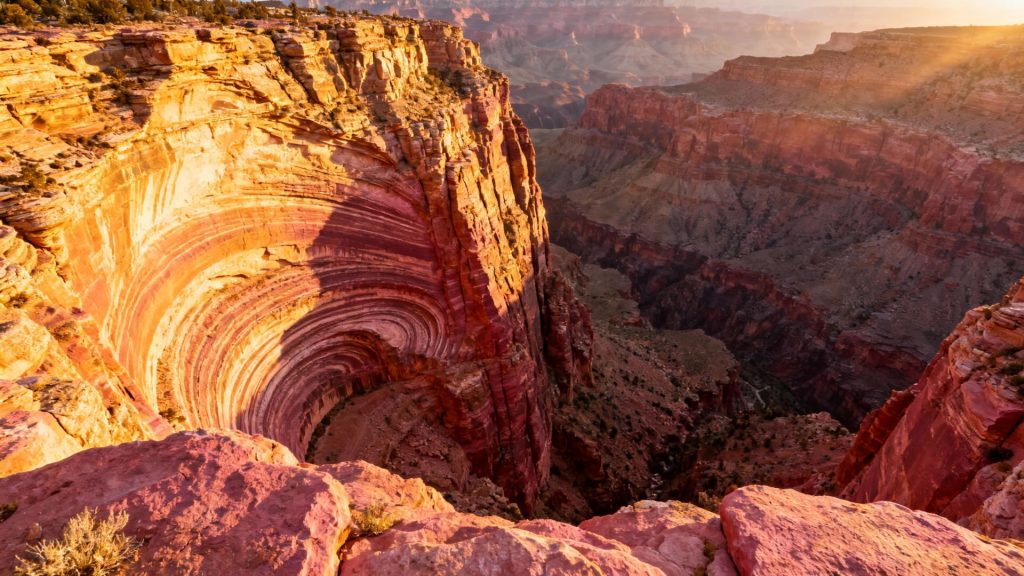
Dawn and dusk perform daily alchemy here. At sunrise, the canyon walls ignite in fiery bands revealing mineral veins – iron reds, copper greens, manganese blacks – that vanish under noon’s bleaching glare. As shadows lengthen, honey-colored light pours through tomb openings, illuminating interior chambers where doves nest in corbelled ceilings. Seasons transform the stage: winter rains bring waterfalls cascading down normally dry wadis, while summer nights turn the valley into an open-air planetarium. Moonlight etches tomb facades in silver, making the carved faces of Isis and Dionysus appear to move.
Engage all senses to commune with this place. Press palms against sun-warmed sandstone still holding yesterday’s heat. Taste the metallic tang of desert air after rare rainfall. Hear the wind’s mournful song as it flutes through crevices, mimicking the lost music of ancient flutes. Watch the dance of shadows changing minute by minute, recomposing every pillar and pediment. Notice how juniper berries release their resinous perfume underfoot, blending with the scent of centuries-old mortar. The true monument isn’t any single tomb, but the relationship between light, stone, and stillness.
Petra doesn’t demand nostalgia – it gently excavates it from your bones. As twilight fades the monuments into silhouettes, the canyon whispers of all who’ve stood where you stand: traders calculating profit margins, pilgrims praying to forgotten gods, lovers tracing promises on rock walls. The city’s greatness lies not in permanence but in its exquisite mortality, showing how gracefully human creations surrender to wind and rain. Walking back through darkness, your footsteps join the ghostly procession of millennia, understanding that these stones were never meant to endure forever – only long enough to remind us how fleeting beauty becomes eternal memory.