
Silent Echoes in Bamboo Groves: Kyoto’s Timeless Embrace of Seasons Past
Amidst the rustling leaves and weathered temples, a journey through Japan’s cultural heartland unfolds, inviting travelers to rediscover forgotten moments.
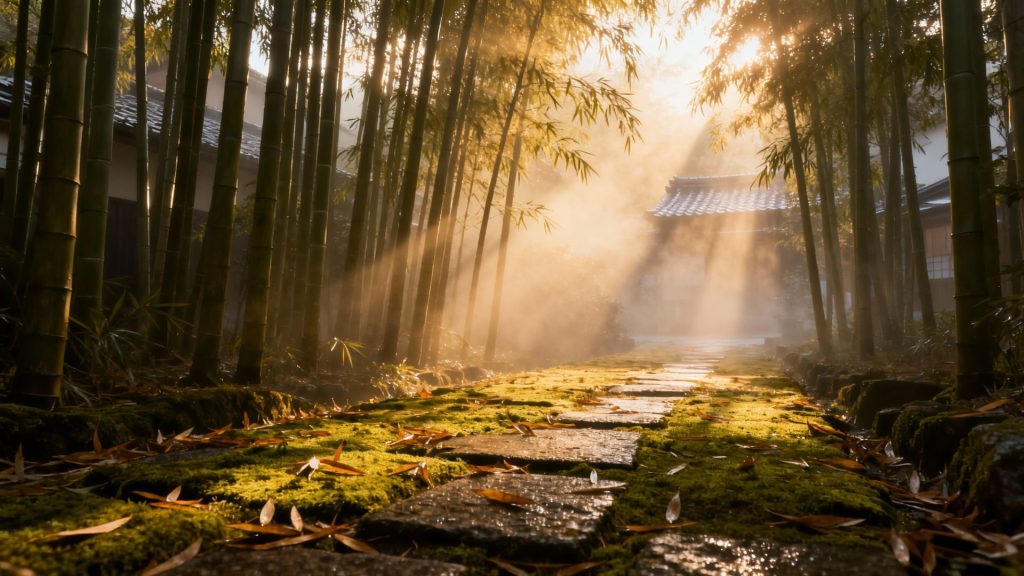
Dawn breaks softly over Kyoto, the city still cloaked in a delicate mist that clings to ancient rooftops and stone pathways. The distant chime of temple bells drifts through the quiet, a resonant echo that seems to carry centuries of whispered prayers, while the first golden rays of sunlight pierce the bamboo forests of Arashiyama, casting intricate patterns on moss-covered ground. Here, the air is crisp with the scent of damp earth and pine, awakening senses to a world where time flows like a gentle river, inviting wanderers to pause and breathe in the stillness. This initial immersion, rich with auditory and olfactory details, transports visitors instantly to a realm where every step feels like a rediscovery of something deeply familiar yet profoundly new.
At the heart of this serene landscape stands Kinkaku-ji, the Golden Pavilion, its gilded facade shimmering on the mirror-like surface of the surrounding pond, creating a visual dance of light that captures the essence of Japan’s artistic legacy. Surrounded by meticulously tended gardens, where koi fish glide silently beneath water lilies and stone lanterns stand sentinel, this iconic structure embodies a perfect harmony between human craftsmanship and natural beauty. The reflection of the pavilion in autumn, when maple leaves blaze in fiery reds and oranges, paints a scene that etches itself into memory—a testament to how architecture can become a living part of the environment, evoking emotions without uttering a single word of nostalgia.
Kyoto’s soul is woven into traditions that speak of mindfulness and simplicity, such as the tea ceremony performed in tranquil tea houses nestled among cherry trees. These rituals, rooted in centuries of practice, teach an appreciation for the present moment through deliberate movements and serene surroundings. The city’s architecture, with its wooden structures and sliding doors, is designed to invite nature indoors, allowing breezes to carry the fragrance of blossoms and the sound of rustling leaves into intimate spaces. This philosophy extends beyond buildings to the daily rhythms of life, where respect for history and the natural world creates a tapestry of cultural continuity that resonates with every visitor, fostering a quiet introspection on the enduring human spirit.
As seasons shift, Kyoto transforms in a symphony of colors and moods—spring brings a fleeting cascade of cherry blossoms, their pink petals drifting like snowflakes to blanket the city in ephemeral beauty, while autumn ignites the landscape with maples ablaze in crimson and gold. These changes, from the cool greens of summer to the stark elegance of winter snow, mirror the cyclical passage of time, each phase offering a new perspective on the same timeless vistas. Walking through Philosopher’s Path in spring or the hills of Higashiyama in fall, one witnesses how light and shadow play on ancient stones, creating moments that feel both immediate and eternal, stirring memories of personal journeys and shared human experiences.
To fully embrace Kyoto, wander its narrow lanes and hidden alleys, where sensory details anchor the experience in vivid reality. Listen to the gentle rustle of bamboo in the wind, the soothing flow of the Kamo River, and the soft chime of wind bells hanging from eaves. Inhale the earthy aroma of rain-soaked soil or the subtle fragrance of green tea wafting from traditional shops. Feel the cool, smooth texture of centuries-old stone bridges underfoot, a tactile connection to the past. These elements, free from modern distractions, guide travelers to engage all senses, transforming a simple stroll into a meditative journey that rekindles dormant emotions and personal recollections.
Kyoto is not merely a place to visit; it is a dialogue with the ages, where every corner and quiet moment invites travelers to reflect on their own place in the grand tapestry of time. As one meanders through its sacred spaces and serene gardens, the city becomes a mirror, reflecting inner landscapes of memory and longing. In the stillness of a temple courtyard or the hush of a bamboo grove, there arises a profound sense of connection—an unspoken nostalgia that emerges not from words, but from the shared human experience of beauty, impermanence, and the quiet joy of being present in a world that whispers stories of the past to those who pause to listen.