Footprints Etched in Bamboo Shadows: When Kyoto’s Lanterns Whisper Timeless Secrets
Beneath vermilion torii gates that bleed into infinity, stone pathwavs absorb centuries of silent footsteps before dawn breaks the kodama’s slumber
Mist clings to the cedar columns of Fushimi Inari like ancestral memories reluctant to fade. Your knuckles brush against damp wood grain older than empires, each ridge a chronicle of seasons weathered. Beneath your soles, stones worn concave by a millennium of tabi-socked feet remember what your mind cannot—the exact pressure of a Heian noble’s stride, the hurried shuffle of Edo merchants. The air tastes of petrichor and incense ash, a flavor that bypasses conscious thought to nestle directly in the amygdala’s vault of forgotten sensations. This is where time becomes tangible; not as a concept but as the physical weight of centuries compressing your collarbones.
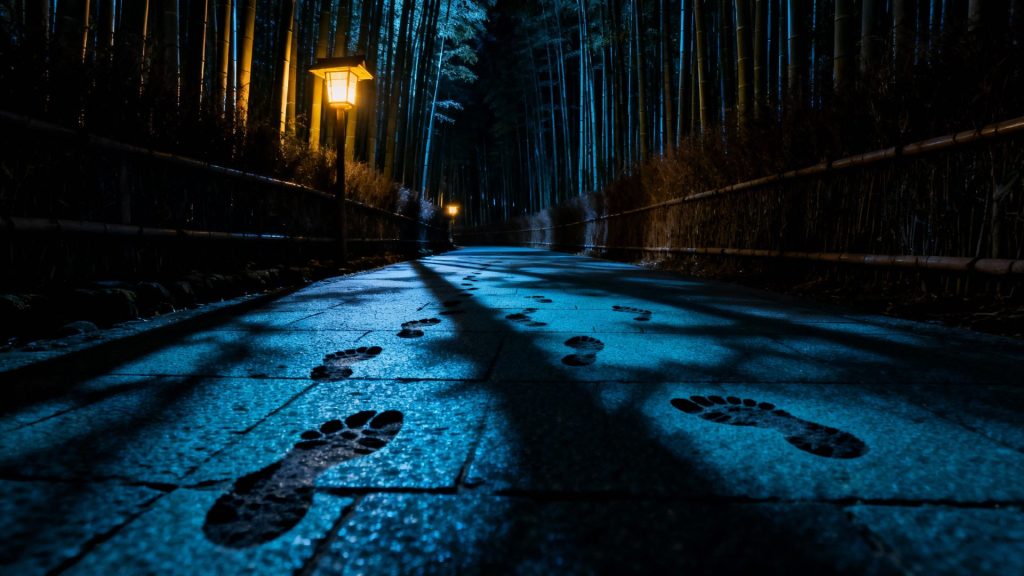
In Arashiyama’s bamboo forest, sunlight fractures into jade shards through towering canes that creak like ancient ship masts. The grove breathes—a collective inhalation swelling the hollow stems until their woody knuckles sigh in harmonic dissonance. This arboreal architecture embodies ma, the sacred void between structures where meaning ferments. You stand enveloped by vertical rivers of celadon, the trunks’ rhythmic spacing guiding your gaze toward unseen horizons. The rustle overhead evokes childhood forts constructed of bedsheets, that universal human longing for sanctuary within nature’s embrace. No plaque announces this truth; it resonates in your marrow when wind makes the bamboo sing.
Kinkaku-ji’s gilded facade shatters afternoon light onto the mirror pond, each ripple rewriting the reflection into fractured biographies. This gold endures not as ostentation but as alchemy—transforming fire’s memory into permanence through ash-born rebirths. Observe how the rock garden at Ryoan-ji arranges fifteen stones so only fourteen ever reveal themselves simultaneously, echoing life’s perpetual incompleteness. Nearby, moss colonies advance with glacial patience across temple steps, their velvet conquest a reminder that beauty thrives in surrender to inevitability. Such landscapes sculpt the Japanese psyche: gardens where clipped azaleas balance volcanic rocks whisper the same philosophy that rebuilds shrines identically every twenty years—a dance with impermanence.
Dusk dyes the Kamo River in indigo and molten copper as herons stab at reflections. Along Pontocho Alley, paper lanterns bloom like phosphorescent fungi on wooden facades. The alley narrows until your shoulders nearly graze both walls, compressing space until past and present laminate into a single sensory plane. Here lies Kyoto’s genius: the way persimmon-dyed noren curtains flutter with the same cadence as twelfth-century palace draperies, how the clack of geta sandals on cobblestones replicates a soundscape unchanged since Murasaki Shikibu penned her tales. As night absorbs the eastern hills, the river becomes a quicksilver ribbon stitching together eras, each ripple carrying away fragments of your modernity.
To witness Kyoto’s soul, arrive at Nanzen-ji aqueduct when maples bleed crimson into stone channels. Trace the moss-furred waterways that feed temple gardens, engineered to replicate mountain streams through calculated turbulence. Notice how stepping stones force slower progress—small betrayals of efficiency that reorient perception. Sample kyo-kaiseiri where porcelain holds landscapes: clear broth floating gingko leaves mirrors autumnal ponds, pickled vegetables mimic forest floor textures. This cuisine trains the senses to read nature’s syntax, preparing you to decipher the silent language of rock arrangements and pruned pines. When you depart, the city’s true gift emerges: an awakened awareness that ancient stones still speak through the calluses of your own hands.