Where Stone Whispers and Light Lingers: Kyoto’s Timeless Embrace in Vermilion Shadows
Beneath ancient cedars and arched torii gates, a city breathes with seasons, revealing beauty in moss-kissed stones and silent temple gardens that hold centuries
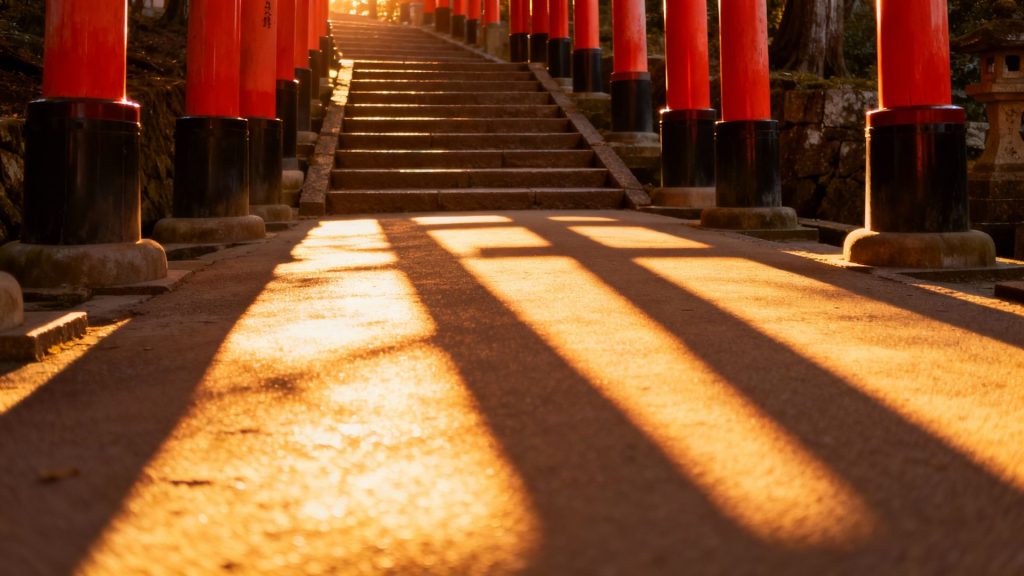
Dawn spills liquid gold through the thousandfold vermilion arches of Fushimi Inari, casting stripes of light that dance upon stone steps worn smooth by eight centuries of pilgrim footsteps. The air hangs heavy with the musk of damp cedar and old prayers, each breath tasting of moss and memory as you ascend the sacred path where foxes guard the boundary between worlds. Time dissolves in this tunnel of crimson wood – the rhythmic creak of aging timber becomes a heartbeat, the rustle of maple leaves overhead an echo of silk-robed processions long vanished yet forever imprinted in the mountain’s silence.
Descending to the Kamo River at twilight, the water mirrors lantern-glow from teahouses where paper screens glow like captured moons. Here, geometry bows to nature: wooden machiya houses lean conspiratorially over alleyways, their blackened beams softened by centuries of rain and wind, while temple eaves stretch skyward with the grace of cranes in flight. The city’s soul lives in these contradictions – between the precise raking of Zen gardens and the wild exuberance of cherry blossoms that explode over castle walls each spring, between the stillness of rock arrangements at Ryoan-ji and the vibrant clatter of Nishiki Market’s copper fish kettles.
Seasons rewrite Kyoto’s scripture in living pigments. Autumn ignites the hillsides surrounding Kiyomizu-dera, maples burning with such ferocity they seem to warm the very air, their crimson reflections staining the Otowa waterfall’s basin. Come winter, snow transforms the rock garden of Daitoku-ji into a monochrome scroll, each carefully placed stone wearing a white cap like a monk in meditation. Yet it’s the rainy season that unveils the city’s deepest intimacy: droplets tracing paths down moss-velveted statues, the percussion of water on stone basins composing a symphony for solitary listeners in silver-misted bamboo groves.
To walk Kyoto is to converse with textures. Fingers brush cool granite Buddhas polished by generations of hopeful touches; palms press against the rough-hewn pillars of Sanjusangen-do’s hall where a thousand gilded Kannon statues stand sentinel in dimness smelling of camphor and devotion. The tongue discovers the umami depth of dashi broth simmered since dawn in century-old shops, the delicate bitterness of matcha whisked to froth in tearooms overlooking raked gravel seas. Ears tune to the hollow thock of shishi-odoshi deer scarers keeping rhythm in hidden gardens, the distant chime of a temple bell carried on wind that once cooled samurai brows.
Nightfall reveals another alphabet of light: paper lanterns bobbing like fireflies along Pontocho’s narrow spine, the sudden gold blaze of Kinkaku-ji’s reflection shattering across its pond. In these hours, modernity recedes like a tide, leaving only the essential – the curve of a tiled roof against indigo sky, the scent of roasting chestnuts from a street vendor’s cart, the weight of history in a stone step hollowed by countless sandals. The city teaches stillness not as absence but as presence; an invitation to witness how wood warms under touch, how shadows deepen in afternoon courtyards, how a single maple leaf’s descent can contain entire philosophies.
Kyoto asks no questions but opens every answer. It exists in the space between a temple bell’s last vibration and the next breath, in the way moss claims fractured stone not as ruin but as collaboration. To leave is to carry its quietude within you – the understanding that beauty thrives not in permanence but in gentle surrender to time’s patient artistry, that true nostalgia is not for a lost past but for the eternal present witnessed in a raindrop clinging to a spiderweb between ancient eaves.