Where Water Whispers Forgotten Ballads: Venice’s Liquid Embrace
Navigating the Liquid Labyrinth of Venice, Where Every Ripple Tells a Century-Old Tale
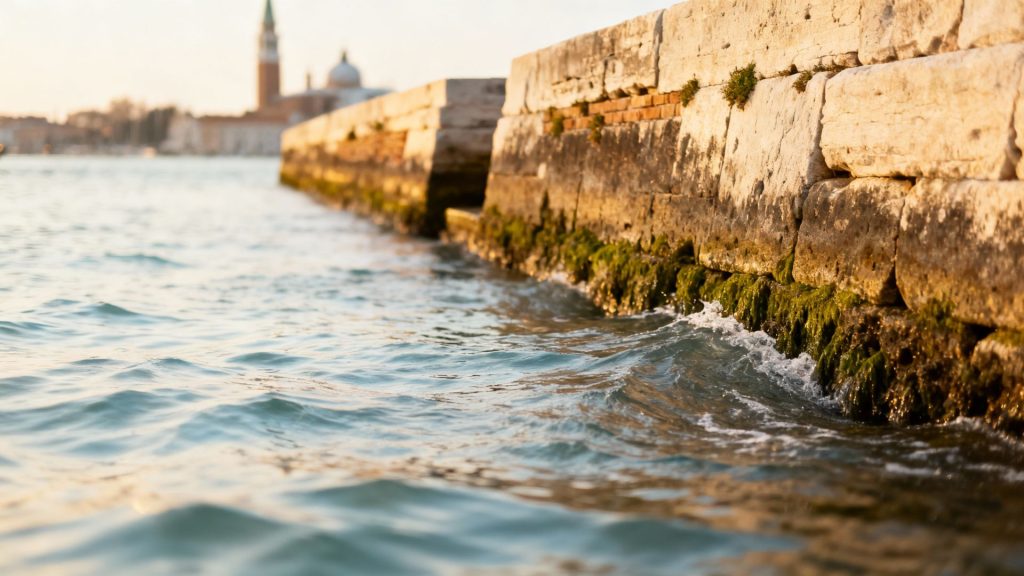
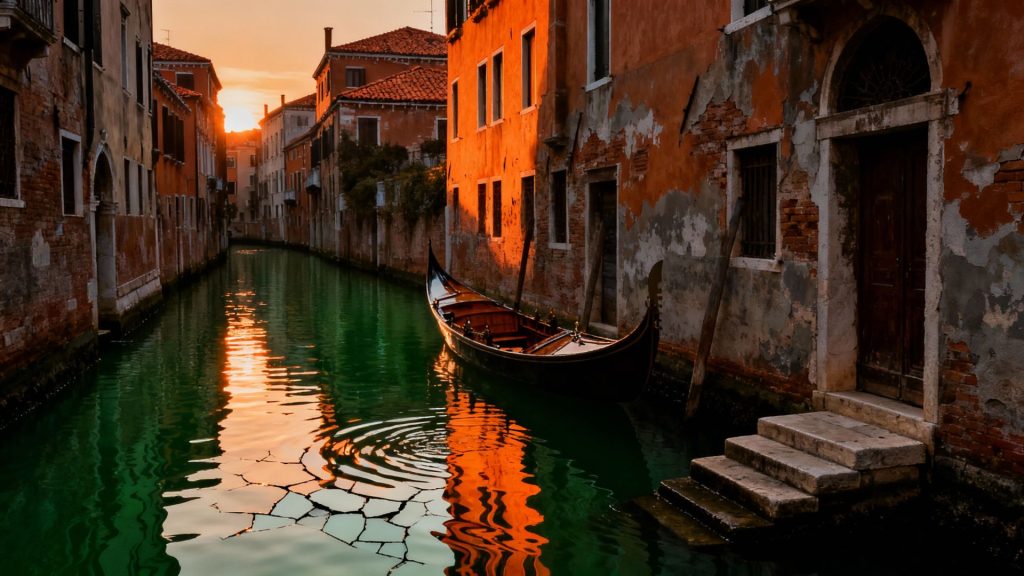
Dawn arrives in Venice not with a shout, but with a sigh – the soft slap of water against ancient Istrian stone, the creak of a lone gondola navigating the mist-shrouded canal, the first golden light catching the peeling ochre facade of a palazzo. The air, thick with brine and the faint, damp scent of centuries, settles on the skin like a cool, silken shroud. There is no horizon, only a seamless blend of water and sky, punctuated by the skeletal fingers of mooring poles rising from the lagoon. This city doesn’t sit upon the earth; it dreams upon the water, a fragile, improbable masterpiece where the very streets are liquid.
To walk Venice is to traverse a living museum sculpted by tide and time. The buildings, grand and humble alike, wear their age with a poignant grace. Salt-laden breezes have softened marble facades, leaving intricate carvings blurred like cherished, fading photographs. Water stains climb the walls like delicate, melancholic lace, mapping the high tides of forgotten winters. Observe how foundations disappear directly into the emerald-green canal, how doorsteps become miniature docks, how centuries of adaptation have woven the city’s fabric inextricably with the element that both sustains and threatens it. The Gothic arches of the Doge’s Palace, reflected perfectly in the still water of a side canal at dusk, speak of a power that understood the necessity of harmony with the sea.
Step away momentarily from the Grand Canal’s bustle onto the vaporetto to Burano. Here, colour explodes in a defiant, joyful chorus against the grey-green lagoon. Tiny fishermen’s houses, painted in vibrant hues of lemon yellow, cobalt blue, and flamingo pink, stand shoulder-to-shoulder like jars of spilled pigment. The air thrums with the rhythmic clatter of wooden looms drifting from open windows – the sound of generations weaving intricate lace, a craft as delicate and enduring as the island itself. In the quiet of a Burano afternoon, beside a canal reflecting a kaleidoscope of facades, the simple act of watching laundry flutter on a line strung between candy-coloured houses becomes a meditation on continuity.
Return to the heart of Venice as the day wanes. The light transforms, painting the Rialto Bridge in molten gold before deepening to bruised purples and fiery oranges that set the waters ablaze. Gondolas glide silently beneath the Bridge of Sighs, their dark forms stark against the luminous water. Inside the dimly lit bacari, the clink of glasses and murmur of conversation rise like incense. The city sheds its daytime bustle, revealing a deeper, more introspective soul. The lap of water against stone grows louder in the gathering twilight, a constant, rhythmic reminder of the city’s intimate, eternal dialogue with the Adriatic.
To truly know Venice, engage your senses fully. Rise before dawn to witness the Rialto Market awaken. Feel the cool, slippery scales of fish just pulled from the lagoon, inhale the sharp tang of citrus and the earthy perfume of artichokes piled high on weathered wooden stalls. Listen to the melodic banter of vendors, a dialect as fluid as the surrounding waters. Seek out the quiet campi, small sun-drenched squares away from the main thoroughfares. Sit on a worn stone bench, feel the sun warm the ancient paving stones beneath your feet, and watch sunlight filter through the leaves of a solitary plane tree, dappling the ground. Taste the crisp bite of a cicchetti – perhaps a simple crostino topped with creamy baccalà mantecato – paired with a small, sharp ombra of local wine.
Venice is not merely a place visited; it is a sensation absorbed, a state of being that lingers long after departure. It is the profound understanding that comes with watching the tide slowly reclaim a fondamenta, inch by patient inch, only to retreat again hours later. This constant, gentle ebb and flow mirrors the passage of time itself – a reminder of impermanence and resilience, of beauty persisting against relentless decay. The city’s magic lies not in denying its fragility, but in its breathtaking, centuries-long defiance of it. To drift upon its waters, to lose oneself in its silent calli, is to touch the quiet, melancholic pulse of history, a whisper across time that resonates deep within the memory, long after the last ripple fades.