
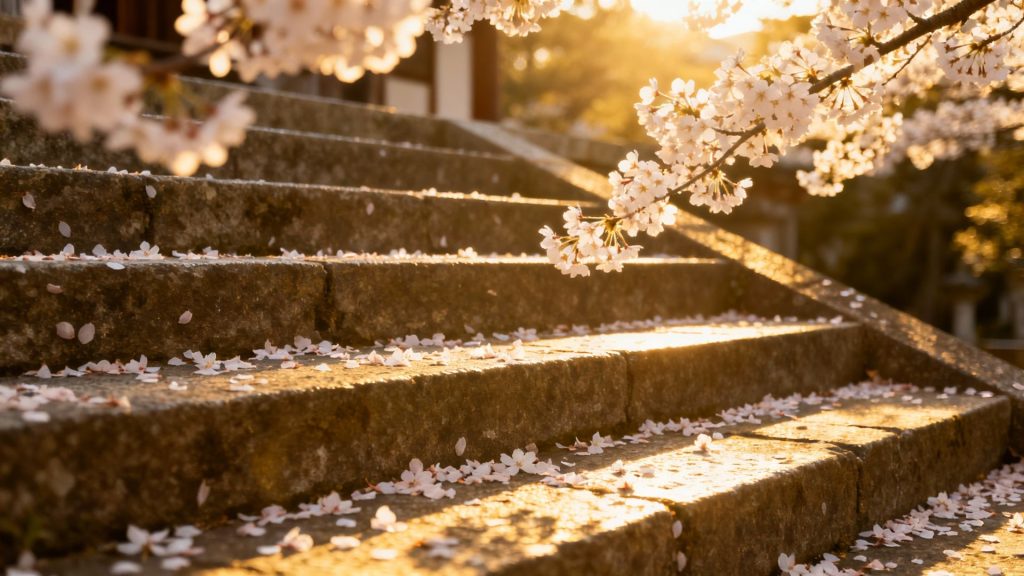
Whispers of Ancient Stones: Kyoto’s Timeless Embrace Under Cherry Blossoms
A Journey Through Serene Temples, Moss-Covered Paths, and the Soul of Japan’s Heartbeat
As dawn unfurls over Kyoto, a soft mist clings to ancient wooden eaves, and the distant chime of a temple bell pierces the stillness, transporting you to a world where time flows like a gentle stream. Cherry blossoms drift along the Philosopher’s Path, their petals painting the air with hues of pink, each one a silent testament to centuries of quiet reverence. Here, amidst the embrace of surrounding mountains, the city awakens not to the clamor of modernity but to a sacred hush that seeps into stone and leaf, inviting you to breathe in the essence of an untouched sanctuary.
The heart of this city pulses within its temples, where Kinkaku-ji, the Golden Pavilion, rises like a dream from the mirror-like pond. Its gilded facade catches the morning light, casting shimmering reflections that dance with shadows on the water’s surface. Moss-covered stones and ancient pines frame this vision, each element meticulously placed to harmonize human artistry with nature’s raw beauty. Walking the grounds, the crunch of gravel underfoot and the scent of damp earth evoke a profound peace, a reminder that true grandeur lies in simplicity and balance.
Beyond the visual splendor, Kyoto whispers its Zen spirit through the rock gardens of Ryoan-ji. Fifteen stones rest on a sea of raked gravel, their arrangement a silent sermon on impermanence and mindfulness. Visitors sit in hushed contemplation, thoughts drifting like clouds, as the garden teaches patience and presence. This is not mere scenery but a living dialogue between earth and spirit, where every curve and line speaks of a culture that finds clarity in stillness, offering refuge from life’s relentless pace.
Seasons transform Kyoto into a kaleidoscope of emotions. Spring cloaks the city in sakura blooms, soft petals falling like confetti, while autumn ignites the hillsides in fiery reds and golds. At Fushimi Inari Shrine, thousands of vermilion torii gates wind up the mountain, their color deepening as the sun dips low, casting long shadows that tell stories of devotion. The crisp crunch of fallen leaves in October or the delicate fragrance of plum blossoms in winter—these sensory moments linger, ephemeral yet eternally renewing, a vivid reminder that beauty thrives in fleeting moments.
To know Kyoto is to walk its hidden paths, where bamboo groves in Arashiyama rise like emerald cathedrals, sunlight filtering through in dappled patterns. The rustle of leaves and cool, earthy air ground you in the now, while a stop at a traditional tea house offers matcha whisked to perfection, its bitter-sweet taste a ritual of awareness. Each step reveals layers of history—from tucked-away shrines to artisan workshops—where the past breathes through every stone, inviting discovery without the need for words or haste.
As lanterns glow in the evening, casting soft light on cobbled streets, Kyoto reveals itself not as a relic but as a living breath. It asks not for nostalgia but for presence—to see the interplay of light and shadow, to feel the weight of centuries, to remember that we are but fleeting visitors in an eternal dance. Here, amidst temples and gardens, the city becomes a mirror to our own impermanence, gently urging us to cherish the now, for every moment is a brushstroke on the canvas of forever.