
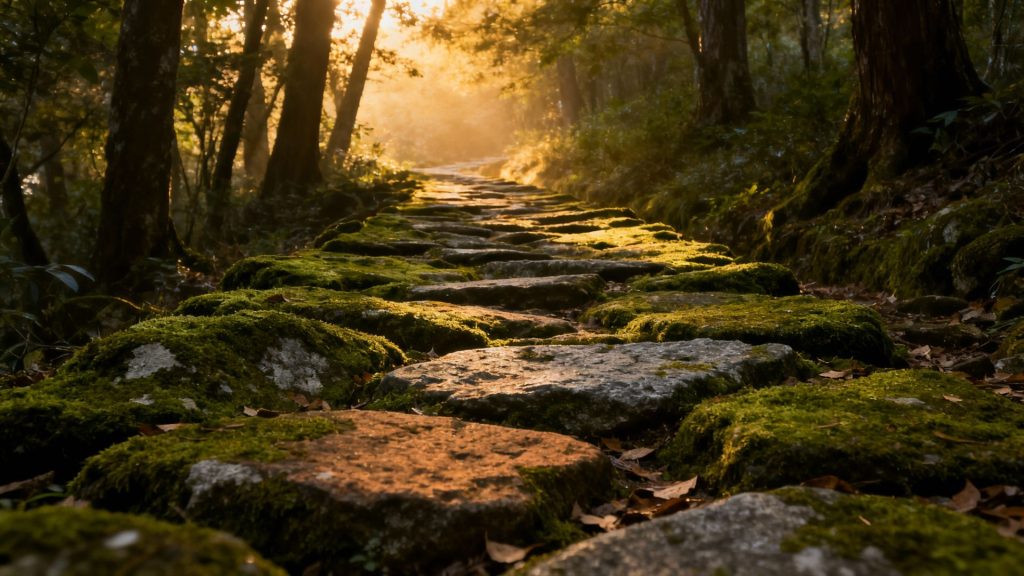
Whispers of Moss and Stone: Where Ancient Paths Hold the Echoes of Forgotten Footsteps
Discovering the Serene Beauty of Kyoto’s Timeless Alleys and Temples That Stir Deep, Unspoken Memories Through Scent and Silence
Dawn breaks over the Philosopher’s Path, a ribbon of cobblestone tracing the canal’s edge, where mist curls like ghostly fingers through maple branches. The air hums with the scent of damp earth and distant incense, a quiet symphony of rustling leaves and the soft chime of temple bells that pulls you into a world untouched by haste. Here, in the heart of Kyoto, time dissolves into the morning light, wrapping you in a cocoon of stillness that whispers of centuries past, inviting you to wander without destination, to feel the weight of history in every moss-kissed stone beneath your feet.
The Golden Pavilion rises from its mirrored pond, a shimmering mirage of gold leaf against emerald pines, where sunlight dances on water like scattered coins. Bamboo groves sway in hushed reverence, their slender stalks casting intricate shadows that shift with the breeze, creating a living tapestry of light and dark. Along the Kamo River, cherry blossoms bloom in spring, painting the banks in soft pinks, while autumn sets the hills ablaze with crimson and gold, each season a testament to nature’s patient artistry. These landscapes are not mere views but portals to introspection, where the silent grandeur of temples and gardens speaks of a harmony between human endeavor and the earth’s enduring rhythms.
In the quiet corners of Ryoan-ji’s rock garden, raked gravel flows like frozen waves around fifteen stones, an embodiment of Zen simplicity that invites contemplation without words. Tea houses nestle among ancient trees, their sliding doors opening to rituals where every gesture—a whisk of matcha, the placement of a ceramic bowl—echoes a philosophy of balance and presence. This culture, born of reverence for the natural world, teaches how architecture bends to the land, with wooden structures designed to weather storms and embrace seasons, a silent dialogue between creation and the elements that has shaped Kyoto’s soul for generations.
As day fades to dusk, lanterns glow along Gion’s alleys, casting amber light on wooden facades that seem to breathe with the day’s warmth. Winter cloaks the city in snow, transforming temples into monochrome masterpieces, while summer nights buzz with fireflies, their fleeting lights mirroring the stars above. The shift from dawn’s cool clarity to twilight’s golden haze reveals how light sculpts the city anew each hour, a dance of shadows that deepens the sense of timelessness, urging you to pause and witness the world in its constant, graceful evolution.
To truly inhabit this space, let your senses guide you: run fingers over weathered stone walls, cool and rough with age; inhale the perfume of plum blossoms in early spring or the earthy aroma of fallen leaves in autumn; listen to the whisper of wind through bamboo, a sound like distant memories stirring. Walk slowly, letting each step sink into the gravel paths, and feel the pulse of the city through its textures and scents, a sensory map that unlocks layers of unspoken nostalgia, connecting you to the essence of place without need for words or haste.
In the end, Kyoto is not a destination but a conversation—a gentle exchange between traveler and landscape, where every stone, every leaf, becomes a mirror reflecting our own fleeting moments. It invites you to sit by a quiet pond, watch koi glide through still waters, and ponder the delicate balance of impermanence and permanence. Here, in the embrace of ancient beauty, you find not escape but a deeper resonance, a reminder that in stillness, we touch eternity, and in wandering, we rediscover fragments of ourselves long forgotten.