Where Stone Whispers to Water: Venice’s Liquid Labyrinth Cradling Forgotten Echoes
Navigating the Timeless Canals Where Centuries Dissolve into Ripples and Renaissance Shadows Dance on Emerald Waves
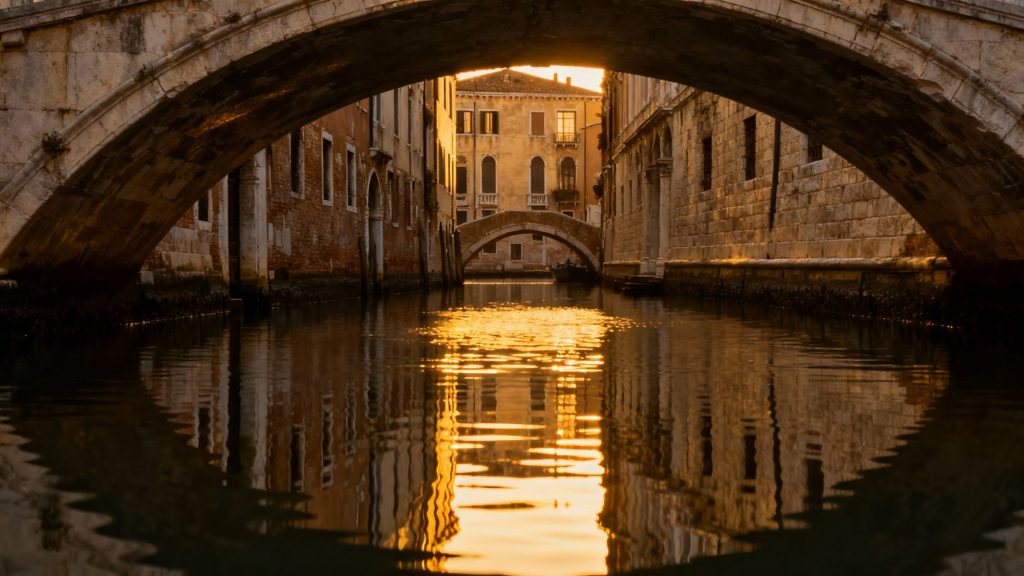
Dawn breaks not with sunlight but with liquid gold, as the first gondola slices through mist-shrouded canals, its prow parting reflections of ochre palazzos like a knife through aged parchment. The silence here is textured – the slap of water against Istrian stone, the distant cry of a gull over the lagoon, the sigh of damp wood settling into its moorings. Venice awakens not as a city but as a memory made tangible, where every ripple carries the weight of six hundred years. Salt-kissed air coils through narrow calli, carrying scents of damp algae and ancient mortar, while above, weathered lion reliefs guard secrets in their chiseled manes. This is a place suspended between sea and sky, where footsteps echo differently on submerged foundations.
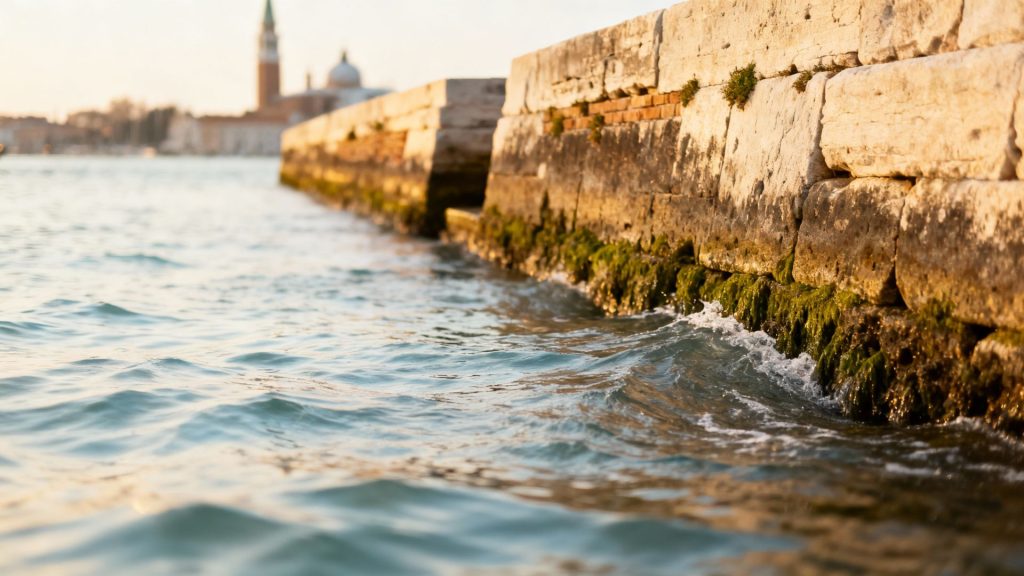
The Grand Canal unfolds like a liquid tapestry, its serpentine curves revealing Byzantine arches weeping with patina beside Gothic traceries. Here, architecture becomes a conversation with the tides: marble steps descend into emerald water, their edges softened by centuries of lapping waves, while brick foundations display the high-water marks of generations like tree rings. At Palazzo Corner della Regina, seaweed patterns bloom across submerged columns where saltwater has rewritten stone into organic sculptures. The Rialto Bridge arches overhead, its shadow a cool sanctuary where gondoliers’ songs rebound off trachyte balustrades, each note dissolving into the aqueous light that filters through alleyways.
Venice’s soul resides in its paradoxical marriage with the sea. The city’s very bones are forests – submerged oak pilings from the Cadore region, petrified by salt into eternal supports. In the Dorsoduro district, brickwork reveals ingenious gaps designed for tidal breathing, while fondamenta walkways slope gently toward canals in surrender to acqua alta. At Santa Maria della Salute, the swirling volutes of Longhena’s baroque dome seem to mimic eddying currents, a stone hymn to the element that both threatens and sustains. The wellheads in hidden campi tell stories too: their wrought-iron lids bear crests of forgotten guilds, while the cisterns beneath hold centuries of filtered rainwater – a testament to Venetian ingenuity in this liquid realm.
Seasons rewrite Venice’s palette with quiet deliberation. Summer ignites the canals into molten turquoise, the light so intense it bleaches frescoes into ghosts on church facades. Come October, acqua alta transforms Piazza San Marco into a liquid mirror, doubling the columns of the Doge’s Palace in perfect, trembling symmetry. Winter brings a different magic: mist erases modern landmarks, leaving only gilded angel weathervanes piercing the gloom, while frost etices delicate lace patterns on mooring posts. At twilight, the city undergoes its most profound metamorphosis. Gas lamps flicker to life along the Zattere, their amber glow melting into indigo waters as the last vaporetto churns toward Lido, leaving behind a silence so profound you hear the lick of waves against centuries-old seaweed.
To experience Venice authentically demands sensory surrender. Rise before the cruise ships invade and trace the route of medieval salt merchants along the Fondamenta della Misericordia. Let your fingertips brush cool Istrian stone as you navigate shadowed sottoportici – those vaulted passageways where footsteps echo like heartbeats. At the Rialto Market, inhale the briny perfume of Adriatic scallops beside pyramids of violet artichokes, their colors vibrating against wet cobblestones. For perspective, ascend the Campanile at sunset when the lagoon transforms into hammered gold, the islands of Murano and Burano floating like scattered jewels. Remember to pause where canals narrow: in these aqueous corridors, the city’s heartbeat becomes audible in the slap of water against brick.
Venice teaches that beauty thrives in impermanence. The salt-crusted bricks, the algae-fringed steps, even the melancholy tilt of campaniles – all speak of elegant surrender to time and tide. As your vaporetto departs, watch how the city’s silhouette dissolves into the lagoon like a mirage. The true journey begins when you realize Venice never leaves you: it becomes a watermark on the soul, a place where past and present merge in the liquid space between stones. Long after your footsteps fade from the fondamenta, the memory of light on water will return unexpectedly – in the curve of a coffee cup, the scent of brine on the wind – whispering that some cities exist not in geography, but in the liminal space where memory and longing meet.