Where Cobblestones Meet the Sea: Venice’s Liquid Tapestry of Time and Tide
A Journey Through Labyrinthine Canals Where Sunlight Weaves Through Stone Columns, Whispering Millennia of Stories Untold
Dawn breaks over Venice as a watercolorist’s dream, the first amber light seeping through alleyways like liquid gold. Mist rises from dormant canals that mirror decaying palazzos, their frescoed facades wearing the soft patina of centuries. In this suspended moment, the splash of an oar echoes like a heartbeat against limestone foundations, while the briny scent of Adriatic tides mingles with damp stone in the cool morning air. A lone gondolier’s silhouette glides beneath the Bridge of Sighs, his shadow dissolving into ripples that carry ghosts of merchants and doges across silent waterways.
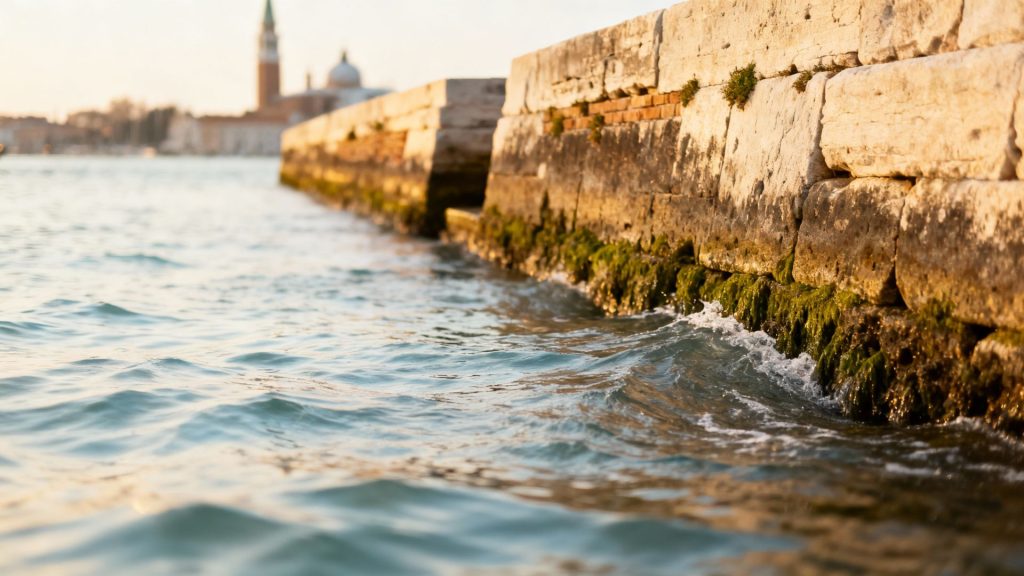
Venice reveals itself as an architectural mirage born from mudflats and defiance. Byzantine arches rise directly from green-hued waters, their marble surfaces carved with stone lions whose chipped manes remember Crusader ships. At Rio di San Polo, sunlight fractures through traceried windows, casting prismatic patterns on submerged staircases where sea moss clings to carved serpents. The city’s skeletal structure emerges in exposed brickwork beneath peeling stucco, revealing how palazzos stand on forests of submerged oak piles – timber ribs flexing like whalebones beneath Venetian weight. Through the lens of shifting tides, reflections warp Gothic windows into liquid kaleidoscopes that dissolve entire facades with each passing vaporetto wake.
This water-bound existence forged a civilization of amphibious ingenuity. Salt-crusted dock posts bear grooves from centuries of rope friction, while canal-side doorways remain permanently scarred by flood lines like arboreal rings. Church floors undulate like frozen waves, their marble slabs settling unevenly atop the ever-shifting lagoon bed. The very language of Venice floats in dialect terms like acqua alta – not mere flooding but a seasonal transformation when Piazza San Marco becomes a looking-glass world. Here, gondolas aren’t relics but functional extensions of pedestrian streets, their pitch-black hulls designed to balance against narrow canals like ink strokes on parchment.
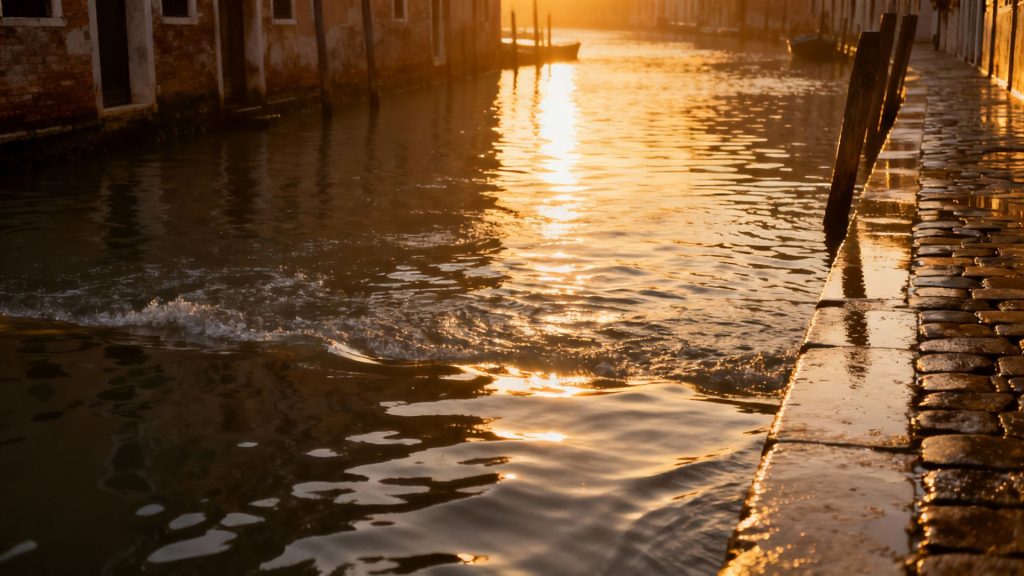
As dusk descends, Venice undergoes elemental metamorphosis. Sodium lamps ignite along fondamenta, casting ochre constellations that quiver on dark waters and transform minor canals into rivers of molten brass. Summer’s algal blooms surrender to winter’s crisp clarity when low tides expose mudflats glittering with sea glass and ancient pottery shards. November’s acqua alta submerges cafe courtyards into aquariums where espresso cups float beside tethered chairs, while February’s fog muffles bell towers until only the clang of Santa Maria della Salute pierces the cottony silence. Each season lays sedimentary memories upon the city: the crackle of frozen algae underfoot, trapped crickets singing in humid palazzo walls, the scent of brine-steamed artichokes from hidden osterie.
To experience Venice is to converse with layers of elapsed time. Kneel to touch algae-slick steps where generations hauled water buckets, taste iodine-rich lagoon shrimp at a Rialto stand, or trace fingertip over marble balustrades polished by ancestral hands. Listen beyond the crowds to the city’s true rhythm: cathedral bells echoing across campo squares, the sucking sounds of tide retreating from stone steps, the wet slap of laundry hung between canal-facing windows. In Venice’s fragile equilibrium between land and sea, every water-warped doorframe and salt-eroded cherub becomes an archive where human persistence meets oceanic inevitability, leaving visitors adrift in the melancholy beauty of things forever slipping away.