Whispers of Crimson Arches: Where Footsteps Echo Through Timeless Forest Paths
Beneath the vermilion canopy of Fushimi Inari Shrine, each gate holds a silent prayer, as sunlight dances through leaves, weaving a tapestry of devotion and nature’s embrace.
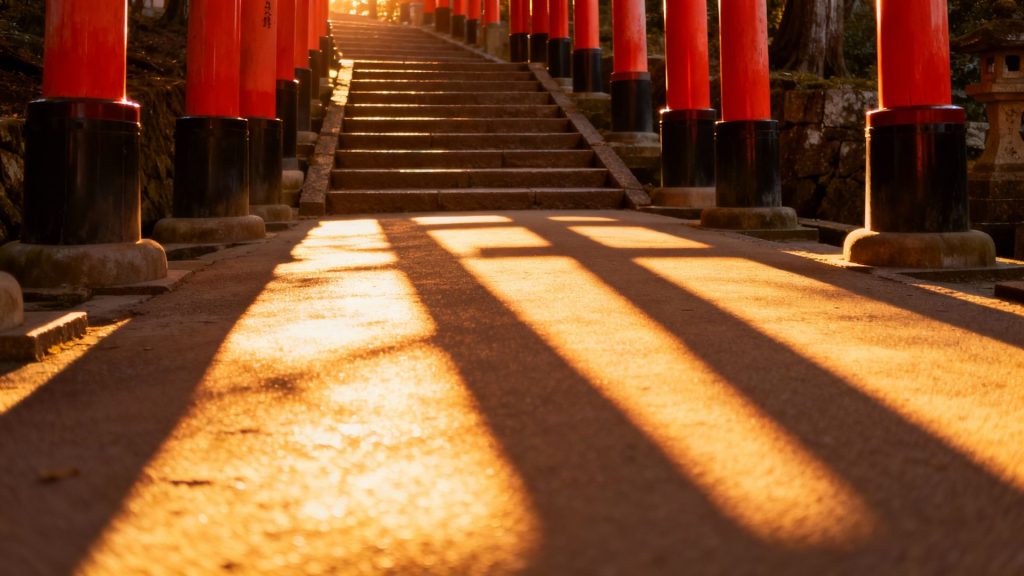
As you pass beneath the first torii gate, the air shifts—cool and thick with the scent of damp moss and ancient wood. A corridor of vibrant red arches stretches into infinity, swallowing the daylight and casting long, dancing shadows that seem to whisper of centuries past. The crunch of gravel underfoot is the only sound, a rhythmic counterpoint to the rustle of bamboo in the breeze, pulling you deeper into a world where time feels suspended. Here, in this sacred threshold, the forest itself breathes with a quiet reverence, inviting you to shed the modern rush and step into a realm of sensory awakening.
The serpentine path winds upward, flanked by thousands of torii gates, each a donation from souls long gone, their vermilion paint a stark, vivid contrast against the emerald green of Mount Inari’s foliage. Sunlight filters through the narrow gaps, painting the ground in shifting patterns of gold and shadow, while the gates’ wooden beams, weathered by rain and sun, tell tales of endurance. At every turn, the scale overwhelms—a seemingly endless procession that curves and climbs, creating a labyrinth of color and light that hums with the collective energy of pilgrimages past.
These gates are not mere structures; they embody a profound symbiosis between human devotion and the natural world, honoring Inari, the deity of abundance. For generations, the faithful have walked this path, their footsteps a silent dialogue with the earth, where the shrine’s design mirrors the mountain’s contours, blending seamlessly into the landscape. The tradition speaks of gratitude and hope, a cultural thread woven into the very soil, without need for grand narratives—just the quiet persistence of ritual that transforms stone and wood into vessels of spirit.
Dawn bathes the gates in a soft, ethereal glow, the air crisp and still, as mist clings to the forest floor like a delicate veil. By dusk, the crimson deepens to a rich, almost liquid hue, casting long, dramatic shadows that stretch across the path. Seasons shift the scene: in spring, cherry blossoms sprinkle pink confetti; autumn sets the maples ablaze, their fiery leaves framing the arches in a riot of color; winter brings a hushed serenity, with snow dusting the gates like powdered sugar, amplifying the silence.
To truly absorb this place, walk the full ascent. Feel the cool, uneven stones beneath your soles, listen to the chorus of birdsong and distant temple bells, inhale the earthy perfume of pine and incense that lingers in the air. Pause at small altars, where offerings of rice and sake rest, and let the solitude sharpen your senses—this is not a sight to rush but a journey to savor, step by mindful step, where every breath connects you to the pulse of the mountain.
In the end, this shrine is more than a destination; it’s a mirror to the soul, where each visitor becomes part of an unbroken chain. As you descend, the gates recede, but the echo of your own footsteps remains—a reminder that in these sacred woods, we are fleeting yet eternal, bound by shared moments of awe that ripple through time, inviting reflection on our place in nature’s grand, enduring dance.