Where Water Whispers Eternity: Venice’s Liquid Labyrinth of Light and Stone
Amidst the silent canals and ancient palazzos, a city built on dreams floats timelessly, inviting souls to wander its watery veins and uncover stories etched in stone.
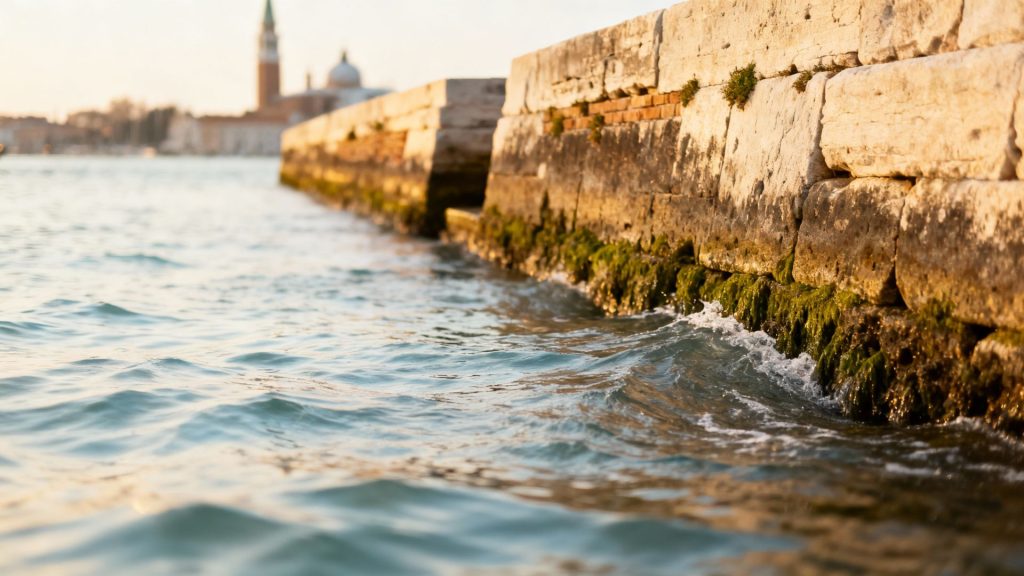
Dawn breaks over Venice like a slow, deliberate breath; the first light spills across the Grand Canal, turning ripples into molten gold as the mist clings to weathered facades. Church bells toll in the distance, their echoes mingling with the gentle lapping of water against centuries-old foundations, a symphony that awakens the senses before the city stirs. Here, the air carries the scent of salt and damp stone, a tangible memory of the sea that cradles this floating marvel, where every corner holds a promise of discovery in the hush of morning.
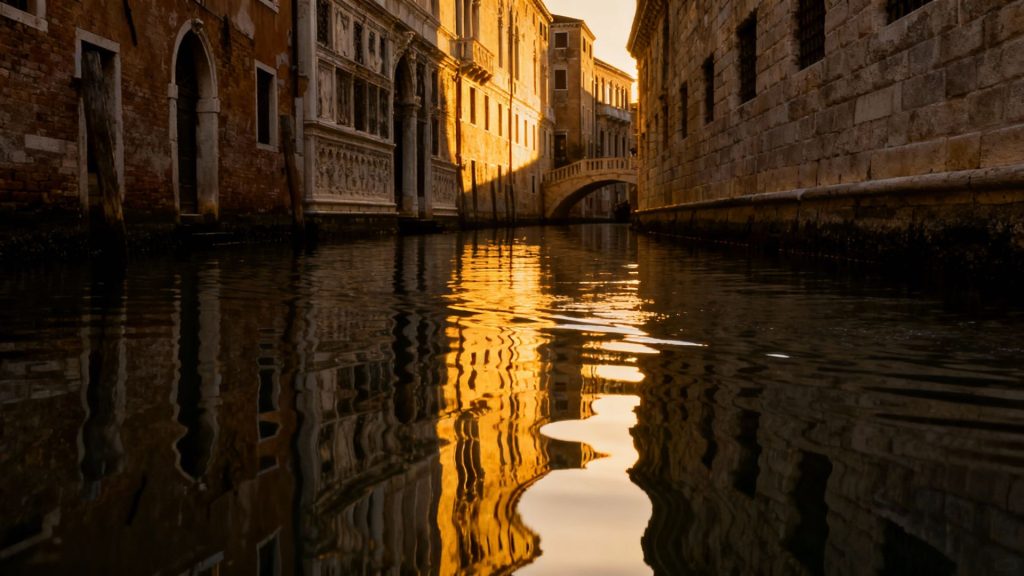
At the heart of Venice lies St. Mark’s Square, a vast expanse of marble and mosaic where pigeons flutter like scattered confetti against the backdrop of the basilica’s golden domes. The Grand Canal unfurls like a liquid ribbon, flanked by palazzos adorned with intricate carvings and faded frescoes, their reflections dancing in the water as gondolas glide silently past. Bridges arch gracefully over narrow waterways, connecting islands in a delicate embrace, each structure a testament to human ingenuity harmonizing with nature’s caprice. This is a landscape sculpted by water, where stone rises defiantly from the lagoon, creating a labyrinth that whispers secrets of empires past.
Venice breathes history through its very architecture, born from the ingenuity of merchants and artisans who defied the sea to build a republic of trade and culture. Palaces stand on wooden pilings driven deep into the silt, their foundations a silent dialogue between man and element, designed to withstand tides that have ebbed and flowed for a millennium. In the quiet alleys, the spirit of the Renaissance lingers, seen in the ornate balconies and hidden courtyards that once hosted poets and painters, their legacy echoing in the city’s resilience against time’s erosion. This is not merely a place of beauty but a living archive, where every stone tells of adaptation and endurance, a human story woven into the fabric of the lagoon.
As seasons shift, Venice transforms; summer bathes the city in a warm, golden haze, drawing crowds whose laughter mingles with the splash of oars, while autumn cloaks it in a melancholic mist, turning canals into mirrors of russet and amber. At dusk, the fading light paints palaces in hues of rose and violet, casting long shadows that deepen the sense of solitude, and by night, the moonlit waterways shimmer like liquid silver, offering a serene counterpoint to the day’s vibrancy. Winter brings a hushed stillness, when frost etches patterns on windowpanes and the rare snowfall blankets the city in a soft, ephemeral purity, reminding travelers of the fleeting nature of moments captured in this eternal dance.
To wander Venice is to engage in a quiet conversation with time itself, where each step on cobblestone paths or glide through narrow canals becomes a meditation on impermanence and memory. The city does not demand attention but offers itself as a vessel for reflection, inviting visitors to trace the contours of history with their own senses, to feel the cool stone beneath fingertips and hear the distant call of seabirds. In this interplay, the traveler finds not just a destination but a mirror to their own journeys, a reminder that beauty endures in the spaces between water and land, light and shadow, stirring echoes of shared human experience long after departure.