Whispering Torii Gates: Where Time Weaves Memories Through Vermilion Arches
A Journey Through Fushimi Inari”s Endless Paths, Where Light and Shadow Dance to Evoke Forgotten Echoes of Ancient Japan
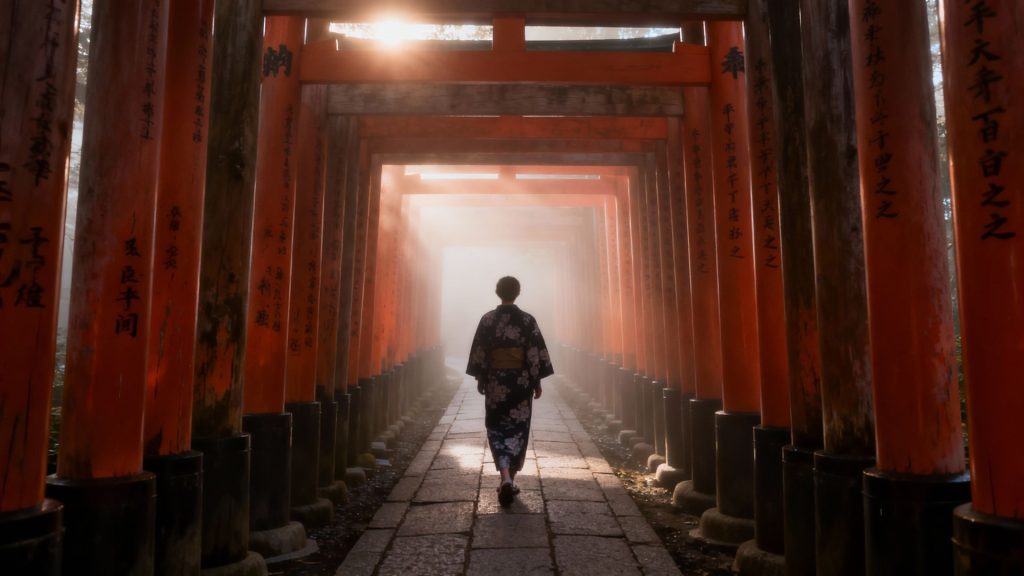
As you step beneath the first crimson arch of Fushimi Inari Shrine, a hushed embrace of vermilion gates unfolds before you, stretching into infinity along the forested mountainside. The air, thick with the earthy scent of moss and ancient cedar, muffles Kyoto”s distant hum, leaving only the whisper of wind through bamboo leaves and the crunch of gravel underfoot. Sunlight filters through the canopy, dappling the path with golden flecks that shift with each breath, inviting you into a sanctuary where time dissolves into pure presence. This initial moment captures the soul of the place—a threshold where reality bends into reverie, awakening dormant senses and stirring echoes of journeys long past.
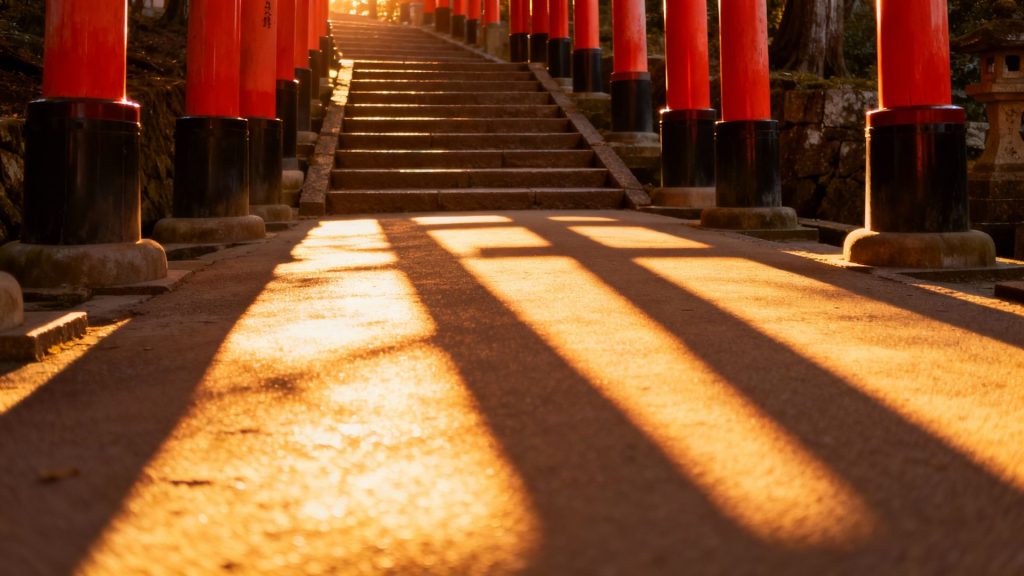
Thousands of torii gates, each a vibrant stroke of orange against the deep emerald forest, form a tunnel that winds serpentine up Mount Inari. Their wooden beams, weathered yet radiant, bear silent inscriptions of hopes offered to the Shinto gods. Stand beneath one, and the world narrows to this single frame: the play of light carving intricate patterns on the stone path, shadows dancing like fleeting memories. The gates lean into one another, creating rhythmic arches that guide the eye upward, where mist often shrouds the peaks, adding an ethereal veil. This visual symphony—where color meets scale—evokes a profound stillness, a canvas where every glance imprints itself on the mind, reminiscent of childhood wonder in sacred groves.
Rooted in centuries of devotion to Inari, the deity of rice and prosperity, this shrine embodies a harmony between humanity and nature. Each gate represents a tangible prayer, a donation from seekers of blessings, woven into the landscape without disrupting its wild grace. The path is lined with smaller shrines, their stone foxes—guardians of the sacred—silent witnesses to generations of pilgrims. Here, spirituality is not confined to rituals but flows through the environment: the forest”s whispers are chants, the rustling leaves a hymn. This interplay reflects Japan”s enduring ethos of coexistence, where history lives not in grand monuments but in subtle, enduring bonds that echo our own timeless quests for connection.
Return at different hours, and the shrine transforms with the day”s rhythm. Dawn bathes the gates in soft, golden light, the mist rising like ghosts of dew, as birdsong heralds the forest”s awakening. Dusk cloaks everything in amber warmth, lanterns flickering to life along the paths, casting long shadows that deepen the sense of solitude. In autumn, fiery maples blaze alongside the vermilion arches, their hues merging in a riot of color; winter drapes the scene in pure white silence, snow muffling all sound and amplifying the inner peace. Seasons shift, yet the essence persists—an eternal dance of change and constancy that mirrors our own fleeting moments, reviving half-remembered walks in nature”s embrace.
To fully immerse, wear sturdy shoes for the gentle climb, allowing pauses at tranquil clearings. Listen: to the distant trickle of hidden streams, the creak of aging wood, and the wind”s soft caress. Feel the cool, smooth stones underfoot, the damp air on skin, and the weight of centuries in the quiet. Taste the stillness, like fresh water from a shrine”s font, and let the senses absorb rather than rush. Simple acts—inhaling the cedar-scented breeze or tracing a moss-covered lantern—anchor you in the present, transforming observation into lived experience, akin to rediscovering forgotten paths in one”s mind.
Walking these paths, you become part of a continuum—a traveler threading through arches that have sheltered countless souls before. The gates, ancient yet ever-renewed, stand as metaphors for memory: what fades in mind lingers here, in the interplay of light and shadow. This journey urges reflection on transience and permanence, how we carry landscapes within us, and how places like Fushimi Inari offer not escape but reunion with our own stories. In its quiet grandeur, the shrine whispers that the past is not lost but awaiting revival through each step we take.