
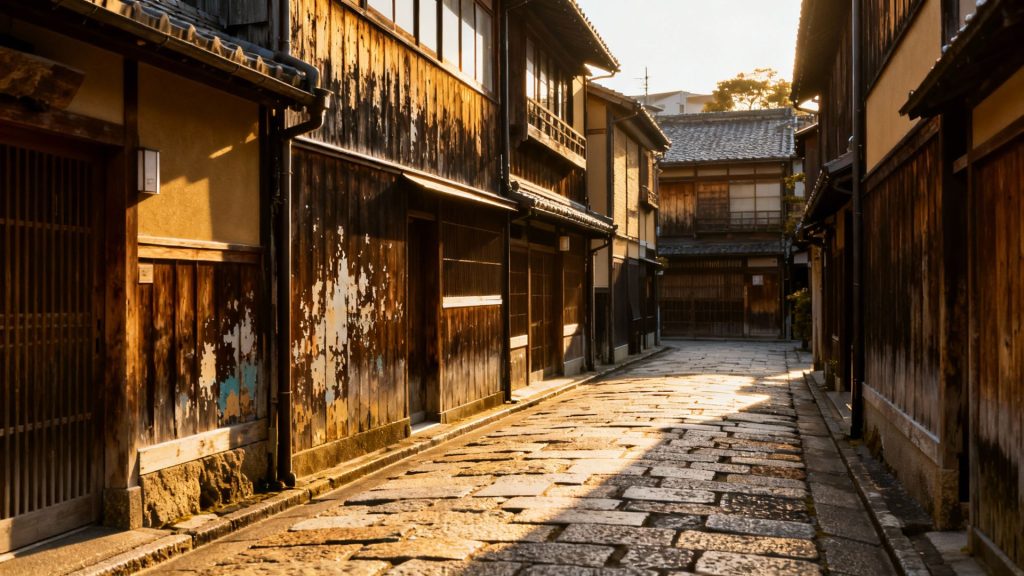
Whispers in Stone: Kyoto’s Timeless Alleys Where Every Footstep Echoes Centuries Past
Discover the soul of Japan’s ancient capital through its serene temples and moss-covered paths, where history breathes in the rustle of leaves and the glow of lantern light.
Dawn breaks over Fushimi Inari Shrine, casting long shadows through the vermilion torii gates that climb the hillside like a fiery serpent; the air hums with the scent of damp earth and incense, a silent invitation to wander where time itself seems to pause, and the only sounds are the distant chime of temple bells and the crunch of gravel underfoot, pulling you into a world untouched by modernity.
At the heart of Kyoto, Kinkaku-ji Temple rises from the edge of a mirror-still pond, its gold-leaf facade shimmering in the midday sun, reflecting not just light but the weight of six centuries—each ripple a testament to Zen philosophy, where simplicity and nature intertwine in a dance of balance, evoking a quiet reverence that permeates the surrounding gardens and stone pathways.
This city’s spirit is woven into the very fabric of its architecture, from the wooden teahouses hidden in Gion’s alleys to the rock gardens of Ryoan-ji, where raked gravel patterns mimic ocean waves, embodying the Buddhist principle of impermanence; here, the absence of human figures in design speaks louder than words, inviting contemplation on how tradition adapts to the land, fostering a deep connection to the earth and seasons.
As seasons shift, Kyoto transforms: spring cloaks the Philosopher’s Path in a blush of cherry blossoms, their petals drifting like snowflakes onto mossy banks, while autumn ignites the hillsides with maples ablaze in crimson and gold, each change a reminder of life’s fleeting beauty, captured in the cool mist of morning or the warm hues of dusk that soften temple eaves.
To truly absorb this place, engage all senses—walk slowly along the Kamo River at twilight, feeling the cool breeze carry whispers of history, taste the subtle bitterness of matcha in a quiet garden, and let the sight of lantern-lit streets at night awaken a primal nostalgia, guiding you to hidden corners where the past feels palpably present.
In the end, Kyoto is not just a destination but a dialogue between traveler and terrain, where every stone and shrine becomes a mirror for our own memories, urging us to pause, reflect, and find solace in the eternal dance of nature and time, leaving an imprint that lingers long after departure.